

Tetanus Vaccination: Do I Need A Tetanus Shot?

“Most people associate tetanus shots with stepping on a rusty nail. While this situation would certainly call for a tetanus vaccination, there is a wide variety of injuries for which a tetanus shot is justified”.
-Dr. Bella Zimilevich, MD
Do you know when you received your last tetanus vaccination? As adults, few people think about their tetanus status until they are injured and are asked about it. Then they are forced to try to recall when they had their last tetanus shot. If they can’t remember, and there is no way to find out, they may be given a vaccination that they don’t need. This scenario can be avoided by writing the date of your last tetanus vaccination and putting it in your wallet.
What is tetanus?
Tetanus, commonly referred to as lockjaw, is caused by bacteria (Clostridium tetani) that are commonly found in the soil, dust and manure. It can also be transmitted through bites from animals. The term lockjaw came about because tetanus causes extreme muscle spasms and paralysis that often affects the jaw first, causing the jaw to become ‘locked’. The bacteria enter the body through a break in the skin and produce a toxin that travels along the nerves from the muscles. The condition is very painful and can affect the muscles that control breathing. Tetanus can be fatal. Fortunately, a vaccine is available to prevent tetanus.
What types of wounds require a tetanus shot?
Puncture wounds, such as the tiny but deep wounds that occur from stepping on a dirty or rusty nail, are most often associated with tetanus, but virtually any break in the skin can become a portal for the bacteria that cause tetanus. A common myth is that a wound that bleeds heavily prevents tetanus by washing away the bacteria that cause the condition, but this is simply not true. Even a simple scratch that breaks the skin can result in tetanus.
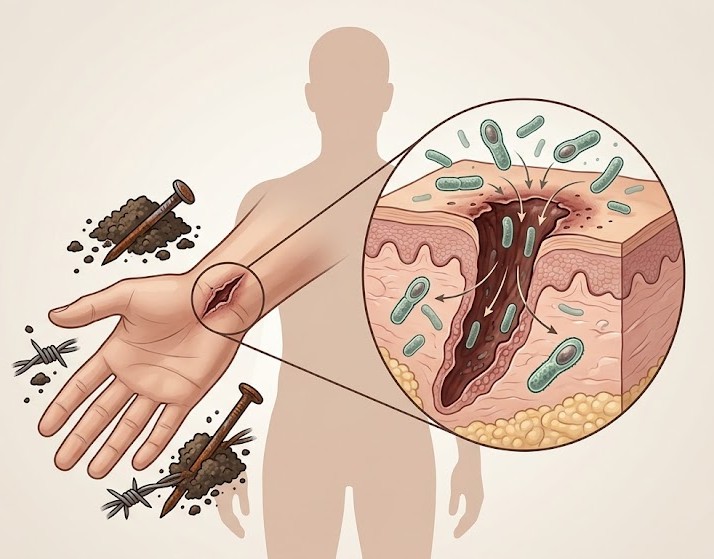
The following accidental (and purposeful) wounds can put you at risk for tetanus:
- burns
- foreign bodies
- puncture wounds
- tattoos and body piercings
- crush injuries
- surgical wounds
- dog bites
- compound fractures (in which the broken bone pierces the skin)
How often do I need a tetanus shot?
As a child you were probably vaccinated against tetanus with a series of shots during childhood. However, the immunity you gain from being immunized as a child does not last a lifetime. You should be immunized against tetanus every ten years in adulthood.
If you have suffered a wound and it has been more than 5 years since your last tetanus booster, I will generally recommend that you have a tetanus shot. In addition, I will thoroughly clean the wound. I may prescribe antibiotics depending on the injury circumstances, the location and the nature of the wound.

If you work in agriculture, construction, emergency services or another area where the risk of injury is high, it’s a good idea to keep track of when you received your last tetanus shot.
This can be of help if you find yourself in an emergency situation where you may be asked about your tetanus status.
If you are injured and are unsure of your tetanus status, or whether your wound warrants a tetanus booster, make an appointment and come in to see me so that I can evaluate your wound and determine your need for a tetanus vaccine.
Make an Appointment
We see patients by appointment only. We are not a walk-in clinic, hospital or urgent care facility.

Flu Shots / Pneumonia Vaccines
Hepatitis Vaccine
Skin Tag Removal
Warts
Toe Fungus Treatment
Eczema
Acne
Psoriasis
Blood Pressure / Hypertension management
Cholesterol management
Irregular Heartbeat
Congestive Heart Failure (CHF)
Atrial Fibrillation
Angina
Pap Smears
Urinary Tract Infection / Bladder Infection
Menstrual Problems
Menopause
Yeast Infections
Enlarged Prostate
Arthritis
Osteoporosis
Alzheimer’s Disease
Coughs
Pneumonia
COPD (Chronic Obstructive Pulmonary Disease)
Heartburn
Hemorrhoids (piles)
Constipation
Diarrhea
Vomiting (Nausea, Upset Stomach)
Irritable Bowel Syndrome (IBS)
Abdominal pain
Inflammatory Bowel Disease (Crohn’s disease, Ulcerative Colitis)
Dizziness
Migraine Headaches
Shingles
Trigeminal Neuralgia
Tennis Elbow
Back Pain
Rheumatoid Arthritis
Sinusitis
Ear infections
Sore Throat (Pharyngitis)
Pink Eye (Conjunctivitis)
Urinary Incontinence
Urinary Tract Infection / Bladder Infection
Work Physicals / Pre-Employment Physicals & Screenings
School Physicals for College
Asthma Control
Diabetes Management
Hypertension
Prediabetes
Tetanus Vaccination
Dog Bites
Heat Exhaustion
Burns
Remove Sutures (Stitches/Staples)
Incision and Drainage
Sprains & Strains
Sonograms
Breathing Test / Spirometry
Electrocardiograms (ECG / EKG)
Urinalysis
Blood tests (cholesterol, blood glucose, complete blood count, thyroid testing and others)
Work Injuries
Auto Accidents
Botox
Dermal Fillers
Dysport
Depression
Insurance We Accept
- 1199SEIU
- Aetna
- Blue Cross Blue Shield
- Cigna
- Emblem
- Fidelis
- GHI
- Health Republic
- HIP
- MagnaCare
- Medicaid
- Medicare
- No-Fault Insurance
- Oscar
- Oxford
- The Empire Plan
- UnitedHealthcare
- VNS Choice
*If you don’t see your insurance here please call (718) 942-4600