

How I Can Help Manage Your Congestive Heart Failure (CHF)

“Congestive heart failure is a chronic condition that can directly affect quality of life. If you have CHF, you will need to be diligent in caring for yourself, and you will need to partner will a physician who can help you manage your condition to avoid hospitalizations and complications. I would love to be your trusted resource and help you live your life to its fullest potential”.
-Dr. Bella Zimilevich, MD
What is CHF?
Congestive heart failure is a condition that develops after your heart has suffered damage from a heart attack or other condition affecting the heart. In CHF, the heart is weak and is less efficient at pumping blood to other parts of the body. It is also sometimes less able to accept blood back into the heart that comes from the lungs, which accounts for many of the symptoms of this condition. Although there is no cure for CHF, with proper treatment you can live a long and full life; however, attention to your condition and proper medical care is important, which is why you need a doctor who you can trust, one who can help you learn about and manage your condition.
What causes CHF?
Having a heart attack is the most common cause of congestive heart failure. These other conditions can also cause CHF:
- undiagnosed or improperly treated high blood pressure (hypertension)
- disease of the heart valve(s)- leaking or narrowing of the valves
- idiopathic heart muscle disease
- obesity
- diabetes
- myocarditis or endocarditis – inflammation of the heart muscle caused by an infection
- alcohol or drug abuse
- anemia, thyroid disorders and other medical conditions
- high blood cholesterol– over a long period of time
What are the symptoms of CHF?
When you understand what CHF is (the inability of your heart to pump blood properly to the rest of the body or to fill properly with blood returning from the lungs) it is easy to predict the symptoms you might experience:
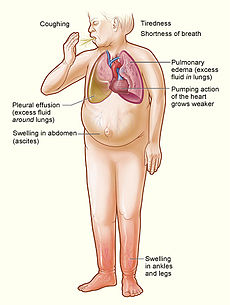
Having a heart attack is the most common cause of congestive heart failure. These other conditions can also cause CHF:
- shortness of breath – may be severe and may get worse when you lay flat due to excess fluid in the lungs
- bloating or feeling full all the time – excess fluid in the abdomen can cause you to feel uncomfortably full
- feeling tired all the time – lack of oxygen, or poorly oxygenated blood, can make you feel tired
- swelling of the ankles, legs, abdomen or sacral area (base of the spine) – excess swelling is due to the heart’s inability to circulate properly, which leads to fluid accumulation
- sudden weight gain – may be as much as 5 pounds in a week or 2 to 3 pounds in a day or two (due to fluid accumulation)
- coughing or cold symptoms that last far longer than normal – coughing is due to fluid/congestion in the lungs
- increased urination, especially at night – the body attempts to get rid of excess fluid through urination
- loss of appetite – fullness in the abdomen and living with a chronic illness can dull the appetite
What can I expect when I come to see you in the clinic?
If you come to see me in the clinic with any of the symptoms described above, I will want to know how long you have had symptoms and whether you have any of the other symptoms listed above. I will question you closely about your symptoms and what brought you in to see me.
I will need to know about your past medical history, especially if you have had a heart attack in the past or have been diagnosed with another heart condition such as a valve problem. I will need to know what medications you are taking and any allergies you may have. I will also want to know if there is a family history of heart disease.
Next, I will examine you. I may ask that you change into a gown for this part of your visit, as it will be easier to pick up any signs of CHF. I will listen carefully to your heart and lungs for abnormal heart sounds and lung congestion. I will examine your abdomen for any swelling. I will also look at your legs, feet and ankles for signs of swelling. I may obtain your weight as a baseline. I’ll ask about cough, fatigue and increased urination, all of which you may have experienced if you have CHF.
Diagnostic tests can help me make the diagnosis. I may order blood work, an ECG (a heart tracing that tells me about the electrical activity of your heart) and a chest x-ray (can detect an enlarged heart and/or fluid in the lungs).
If I feel its necessary I may also order a stress test and/or an echocardiogram, which is an ultrasound of the heart that can tell me a lot about the structure and function of your heart.

I will explain the tests to you, including the reason I am ordering them and what I expect the test to tell me. If any results are abnormal, I promise to explain them to you in terms that you can understand. If necessary, I will refer you to a cardiologist, a physician who specializes in the heart.
How is CHF treated?
Many people with congestive heart failure can be managed with medications, including:
- antihypertensives (medications to lower blood pressure)
- diuretics (medications that help your body rid itself of excess fluids)
- medications such as digoxin, which help the heart to beat more strongly
Some people with severe CHF may require surgery to put in a pacemaker or surgery to unblock clogged arteries. If you need surgery, I can work with you and your surgeon during and after recovery to follow his/her recommendations.
Lifestyle changes are an important part of managing CHF. You may be asked to:
- restrict your daily fluid intake to less than 2 liters a day from all sources
- monitor your blood pressure, pulse and weight regularly at home
- exercise in moderation
- quit smoking
- eat a heart-healthy diet
- increase the fiber in your diet
- decrease the amount of sodium you consume
- avoid excess caffeine and alcoholic beverages
- get lots of rest and sleep
- protect yourself from preventable disease by getting a flu shot and the pneumococcal vaccine
- take your medications on time as prescribed
If you are diagnosed with congestive heart failure, your life will change. With proper treatment, you may find that you feel better and have more energy; however, CHF is a chronic condition that requires careful monitoring for the rest of your life. If you think you might have CHF, or you have already been diagnosed and need a physician who can partner with you to help you lead the best life possible, make an appointment to see me. I can help you manage your condition so that you can enjoy good quality of life.
Make an Appointment
We see patients by appointment only. We are not a walk-in clinic, hospital or urgent care facility.
Flu Shots / Pneumonia Vaccines
Hepatitis Vaccine
Skin Tag Removal
Warts
Toe Fungus Treatment
Eczema
Acne
Psoriasis
Blood Pressure / Hypertension management
Cholesterol management
Irregular Heartbeat
Congestive Heart Failure (CHF)
Atrial Fibrillation
Angina
Pap Smears
Urinary Tract Infection / Bladder Infection
Menstrual Problems
Menopause
Yeast Infections
Enlarged Prostate
Arthritis
Osteoporosis
Alzheimer’s Disease
Coughs
Pneumonia
COPD (Chronic Obstructive Pulmonary Disease)
Heartburn
Hemorrhoids (piles)
Constipation
Diarrhea
Vomiting (Nausea, Upset Stomach)
Irritable Bowel Syndrome (IBS)
Abdominal pain
Inflammatory Bowel Disease (Crohn’s disease, Ulcerative Colitis)
Dizziness
Migraine Headaches
Shingles
Trigeminal Neuralgia
Tennis Elbow
Back Pain
Rheumatoid Arthritis
Sinusitis
Ear infections
Sore Throat (Pharyngitis)
Pink Eye (Conjunctivitis)
Urinary Incontinence
Urinary Tract Infection / Bladder Infection
Work Physicals / Pre-Employment Physicals & Screenings
School Physicals for College
Asthma Control
Diabetes Management
Hypertension
Prediabetes
Tetanus Vaccination
Dog Bites
Heat Exhaustion
Burns
Remove Sutures (Stitches/Staples)
Incision and Drainage
Sprains & Strains
Sonograms
Breathing Test / Spirometry
Electrocardiograms (ECG / EKG)
Urinalysis
Blood tests (cholesterol, blood glucose, complete blood count, thyroid testing and others)
Work Injuries
Auto Accidents
Botox
Dermal Fillers
Dysport
Depression
Insurance We Accept
- 1199SEIU
- Aetna
- Blue Cross Blue Shield
- Cigna
- Emblem
- Fidelis
- GHI
- Health Republic
- HIP
- MagnaCare
- Medicaid
- Medicare
- No-Fault Insurance
- Oscar
- Oxford
- The Empire Plan
- UnitedHealthcare
- VNS Choice
*If you don’t see your insurance here please call (718) 942-4600