

How I Diagnose and Treat Heartburn (Acid Reflux, Gastroesophageal Reflux Disease, GERD)

“Heartburn can be miserable. You may think your heartburn is caused by eating something that doesn’t agree with you (and that may be part of the problem), but heartburn can also be a symptom of a more serious condition known as gastroesophageal reflux disease, or GERD. If you suffer from frequent heartburn, it’s important that you come and see me so that I can not only help you manage your symptoms, but so that I can rule out any serious problems that can have long-term consequences”.
-Dr. Bella Zimilevich, MD
Understanding heartburn (acid reflux)
Between your mouth and your stomach lies your esophagus, and at the bottom of your esophagus, where it joins your stomach, is a valve called the lower esophageal sphincter (LES) that acts to prevent food and stomach contents from escaping (refluxing) up into the esophagus during digestion.
In some people, the LES doesn’t function as it should. Instead of staying tightly closed, the LES opens for no reason, or is unable to close properly, allowing stomach contents to travel up into the esophagus. When stomach acid comes in contact with the delicate lining of your esophagus, you experience symptoms of heartburn.
What are the symptoms of heartburn?
The classic symptom of heartburn is a sensation of burning or pain in the upper abdomen or chest. This discomfort can be so severe that it mimics the pain of a heart attack (and if you experience new or different chest pain, you should always see a doctor immediately).
In addition to heartburn you may also experience:
- difficulty swallowing
- sore throat
- hoarseness
- coughing
- vomiting
- a sensation of having a lump in your throat
- frequent need to clear your throat
- burning sensation in the mouth
- asthma symptoms
What is the difference between heartburn (reflux) and GERD?
Occasional heartburn (gastroesophageal reflux) is common. Millions of people experience heartburn once in a while. However, if you experience heartburn more than two times a week, you may have GERD, which is a risk factor for more serious conditions. Long-term reflux of acid from the stomach can damage the delicate lining of the esophagus, leading to ulceration and bleeding, narrowing of the esophagus (stricture) and other problems.
What makes GERD worse?
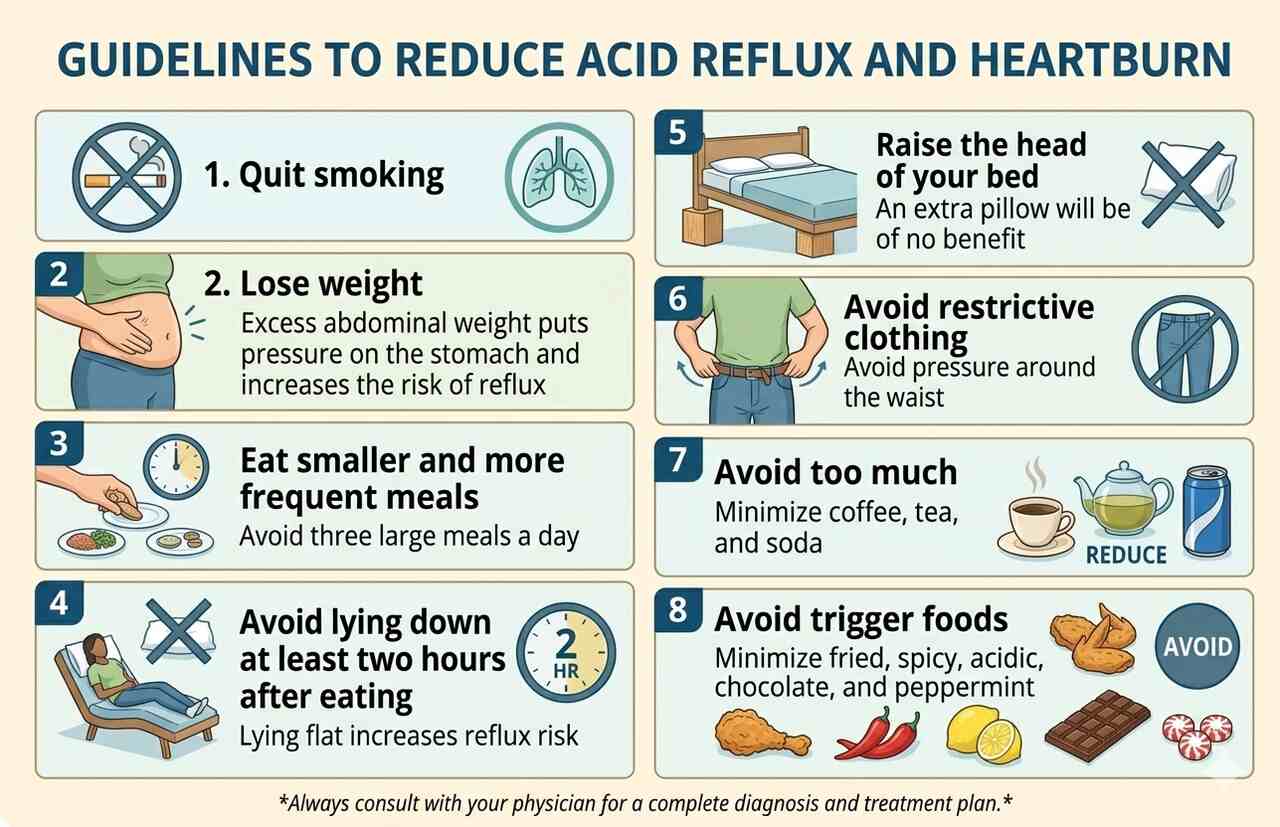
There are several things you can do if you suffer from frequent heartburn:
- quit smoking
- lose weight- excess abdominal weight puts pressure on the stomach and increases the risk of reflux
- eat smaller and more frequent meals, rather than three large meals a day
- avoid lying down for at least two hours after eating
- raise the head of your bed using wooden blocks under your mattress (an extra pillow will be of no benefit)
- avoid wearing restrictive clothing around the waist
- avoid too much caffeine (coffee, tea and soda)
- avoid fried, spicy and acidic foods, as well as chocolate and peppermint
Medical treatment for GERD
If you experience frequent heartburn, you may have tried over-the-counter antacids such as Tums or Rolaids. These may be briefly effective at relieving your heartburn. However, these agents often contain magnesium, aluminum or calcium. If you are taking other medications or have other chronic health problems, you should not take these remedies very often without speaking to a physician.
If your heartburn is frequent and symptoms are moderate to severe, you may need a prescription medication that you can take on a regular basis. In that case, you can make an appointment to come in and see me. We’ll discuss your symptoms, what makes them worse or better and what you have tried on your own to treat your heartburn. I can prescribe an acid-blocking medication that will relieve your symptoms and allow your irritated esophagus to heal. If I am concerned that your symptoms are very severe, or that your symptoms may be caused by something else other than heartburn, I may refer you to other doctors with different expertise, but in most cases I will be the only doctor you need to see for heartburn and GERD. While you are here, we can also discuss things you can do at home to improve your symptoms.
If you suffer from frequent heartburn, make an appointment to come in and see me. Although occasional heartburn is common, frequent heartburn can be a sign of GERD, which can lead to complications if not treated. Don’t ignore frequent heartburn- make an appointment today.
Make an Appointment
We see patients by appointment only. We are not a walk-in clinic, hospital or urgent care facility.
Flu Shots / Pneumonia Vaccines
Hepatitis Vaccine
Skin Tag Removal
Warts
Toe Fungus Treatment
Eczema
Acne
Psoriasis
Blood Pressure / Hypertension management
Cholesterol management
Irregular Heartbeat
Congestive Heart Failure (CHF)
Atrial Fibrillation
Angina
Pap Smears
Urinary Tract Infection / Bladder Infection
Menstrual Problems
Menopause
Yeast Infections
Enlarged Prostate
Arthritis
Osteoporosis
Alzheimer’s Disease
Coughs
Pneumonia
COPD (Chronic Obstructive Pulmonary Disease)
Heartburn
Hemorrhoids (piles)
Constipation
Diarrhea
Vomiting (Nausea, Upset Stomach)
Irritable Bowel Syndrome (IBS)
Abdominal pain
Inflammatory Bowel Disease (Crohn’s disease, Ulcerative Colitis)
Dizziness
Migraine Headaches
Shingles
Trigeminal Neuralgia
Tennis Elbow
Back Pain
Rheumatoid Arthritis
Sinusitis
Ear infections
Sore Throat (Pharyngitis)
Pink Eye (Conjunctivitis)
Urinary Incontinence
Urinary Tract Infection / Bladder Infection
Work Physicals / Pre-Employment Physicals & Screenings
School Physicals for College
Asthma Control
Diabetes Management
Hypertension
Prediabetes
Tetanus Vaccination
Dog Bites
Heat Exhaustion
Burns
Remove Sutures (Stitches/Staples)
Incision and Drainage
Sprains & Strains
Sonograms
Breathing Test / Spirometry
Electrocardiograms (ECG / EKG)
Urinalysis
Blood tests (cholesterol, blood glucose, complete blood count, thyroid testing and others)
Work Injuries
Auto Accidents
Botox
Dermal Fillers
Dysport
Depression
Insurance We Accept
- 1199SEIU
- Aetna
- Blue Cross Blue Shield
- Cigna
- Emblem
- Fidelis
- GHI
- Health Republic
- HIP
- MagnaCare
- Medicaid
- Medicare
- No-Fault Insurance
- Oscar
- Oxford
- The Empire Plan
- UnitedHealthcare
- VNS Choice
*If you don’t see your insurance here please call (718) 942-4600