

Why See A Doctor For Alzheimer’s Disease?
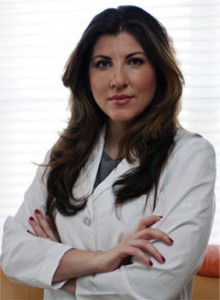
“Many people mistakenly believe that Alzheimer’s disease is a “natural” outcome of aging- this is simply not true. Although advanced age is a risk factor for the disease, it is not an expected outcome of aging. If you are worried that you might be showing signs of Alzheimer’s disease, or you are reading this because you are concerned about someone you care about, it’s important to know that early diagnosis can help slow progression of the disease. It’s important to get an early diagnosis so that treatment can start early”.
-Dr. Bella Zimilevich, MD
What is Alzheimer’s disease?
Alzheimer’s is the most common form of dementia. Dementia is a condition that causes memory loss and a decline in cognitive functioning. Alzheimer’s disease is the most common form of dementia, accounting for somewhere between 50 to 80% of cases of dementia.
What are the risk factors for Alzheimer’s disease?
Age is the single greatest risk factor for the development of Alzheimer’s. Notice that I did not say that aging causes Alzheimer’s (younger people are sometimes diagnosed with Alzheimer’s, but far less often than older individuals), but Alzheimer’s does become more common as age advances. Most people diagnosed with Alzheimer’s are 65 years of age or older.
Heredity is known to be a factor in Alzheimer’s disease. If you have a close family relative (parent, sibling or child) with the disease, your risk is higher than someone who has no family history of the disease.
Scientists have identified genes that are implicated in Alzheimer’s disease. Some genes raise your risk of of developing Alzheimer’s, while others almost guarantee that you will develop Alzheimer’s.
However, it’s important to know that the type of Alzheimer’s that is passed down through generations of the same family is rare, accounting for only about 5% of all cases of Alzheimer’s disease.

Most experts believe that there is no single “cause” of Alzheimer’s. Rather, it is thought that Alzheimer’s develops from a combination of genetic factors and other risk factors. You can’t change your age or your genes, but scientists believe there are other factors that may come in to play that you may have some control over, such as:
- traumatic brain injury– there is some evidence to suggest that patients who have experienced trauma to the brain are at higher risk of developing Alzheimer’s later in life. It’s not a good idea for anyone, regardless of age and risk of dementia, to expose their brain to trauma, so wear a helmet while participating in sports and wear your seatbelt while driving or riding as a passenger.
- heart, lung and cardiovascular health– we know that the brain is nourished with oxygen and other nutrients, so it stands to reason that anyone with an issue affecting blood supply and blood oxygenation may be at higher risk of developing dementia. Control your weight, blood pressure, cholesterol level and blood glucose levels and avoid excessive alcohol use and smoking. In addition, eat a heart healthy diet and try to exercise regularly. All of these can help to keep your heart and lungs (and thus your brain) healthy.
What signs and symptoms might signal the development of Alzheimer’s disease?
The following are some symptoms/signs associated with Alzheimer’s:
- frequent problems finding the right word when writing or speaking
- misplacing things
- showing poor judgement
- withdrawal from people, social activities or work
- personality/mood changes
- memory loss that affects ability to function
- difficulty in performing tasks that were once easy
- memory loss
- difficulty with problem solving/planning
- confusion regarding time and place
- difficulty interpreting visual images or spatial relationships
We may all have difficulty with an item on this list from time to time. People with Alzheimer’s may have difficulties with many of the items on this list on a regular basis, and these difficulties tend to get worse over time. There are seven stages of Alzheimer’s, ranging from stage 1 (no impairment) to stage 7 (very severe decline).
What can I expect if I come to see you (or I bring my loved one to see you)?
You can expect that I will treat you (or your loved one) with respect and dignity. I am an internal medicine physician and I specialize in geriatrics, which means I have specialized training in caring for older individuals. Most importantly, I care and I want to help you or your loved one if you are concerned about Alzheimer’s, as I know just how scary the symptoms can be, and what a diagnosis of Alzheimer’s disease means.
First of all, I will want to take a detailed medical history. I will want to know about past and present medical problems, past surgeries, current medications and allergies. I will also want to perform a thorough physical exam, which means that you will be asked to change into a gown. I will assess you completely from head to toe. I will also do a neurological examination to see if there are balance and/or gait problems, visual problems or other neurological issues.
I may also perform mental status testing, which involves testing of memory, recall and other cognitive functions. Lastly, I may order blood work, brain imaging exams or other diagnostic tests if I feel that symptoms are consistent with Alzheimer’s disease. If I order tests, I will tell you why I think the test is necessary and what I think the test will rule out or tell me.
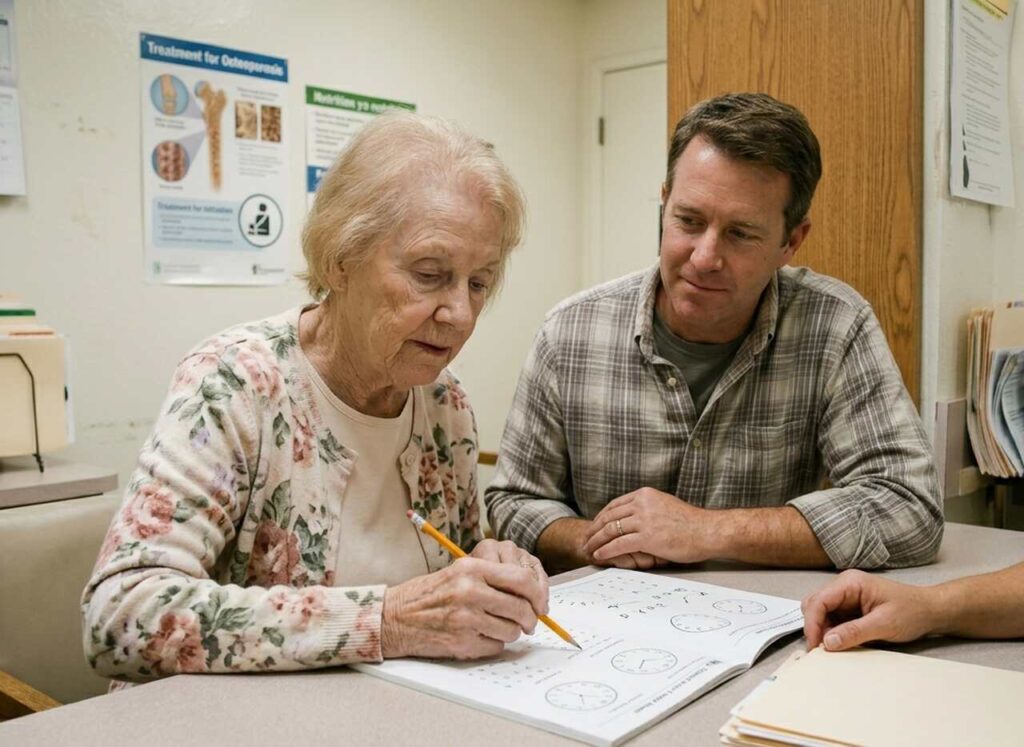
It’s important to know that other diseases and conditions can cause some of the symptoms of Alzheimer’s, and that these conditions may be completely reversible, so it is important to rule them out.
Once I have all of the information I need, we’ll discuss the results and decide on a plan of care. If you, or your loved one, have Alzheimer’s disease it is important to know that, although the condition can’t be cured, there is treatment available that can slow disease progression. Medications can help with memory, sleep disturbances and other symptoms of the disease. It’s also important to know that there is a lot of research going on regarding Alzheimer’s disease, and new knowledge is coming forward all the time.
If you are concerned that you may have Alzheimer’s disease, or you worry that a loved one is showing signs, make an appointment to see me. The sooner you come in, the sooner you will have an answer. If Alzheimer’s is the reality, treatment can begin immediately, which can help to slow disease progression and symptoms.
Make an Appointment
We see patients by appointment only. We are not a walk-in clinic, hospital or urgent care facility.
Flu Shots / Pneumonia Vaccines
Hepatitis Vaccine
Skin Tag Removal
Warts
Toe Fungus Treatment
Eczema
Acne
Psoriasis
Blood Pressure / Hypertension management
Cholesterol management
Irregular Heartbeat
Congestive Heart Failure (CHF)
Atrial Fibrillation
Angina
Pap Smears
Urinary Tract Infection / Bladder Infection
Menstrual Problems
Menopause
Yeast Infections
Enlarged Prostate
Arthritis
Osteoporosis
Alzheimer’s Disease
Coughs
Pneumonia
COPD (Chronic Obstructive Pulmonary Disease)
Heartburn
Hemorrhoids (piles)
Constipation
Diarrhea
Vomiting (Nausea, Upset Stomach)
Irritable Bowel Syndrome (IBS)
Abdominal pain
Inflammatory Bowel Disease (Crohn’s disease, Ulcerative Colitis)
Dizziness
Migraine Headaches
Shingles
Trigeminal Neuralgia
Tennis Elbow
Back Pain
Rheumatoid Arthritis
Sinusitis
Ear infections
Sore Throat (Pharyngitis)
Pink Eye (Conjunctivitis)
Urinary Incontinence
Urinary Tract Infection / Bladder Infection
Work Physicals / Pre-Employment Physicals & Screenings
School Physicals for College
Asthma Control
Diabetes Management
Hypertension
Prediabetes
Tetanus Vaccination
Dog Bites
Heat Exhaustion
Burns
Remove Sutures (Stitches/Staples)
Incision and Drainage
Sprains & Strains
Sonograms
Breathing Test / Spirometry
Electrocardiograms (ECG / EKG)
Urinalysis
Blood tests (cholesterol, blood glucose, complete blood count, thyroid testing and others)
Work Injuries
Auto Accidents
Botox
Dermal Fillers
Dysport
Depression
Insurance We Accept
- 1199SEIU
- Aetna
- Blue Cross Blue Shield
- Cigna
- Emblem
- Fidelis
- GHI
- Health Republic
- HIP
- MagnaCare
- Medicaid
- Medicare
- No-Fault Insurance
- Oscar
- Oxford
- The Empire Plan
- UnitedHealthcare
- VNS Choice
*If you don’t see your insurance here please call (718) 942-4600