

Medical Attention For Heat Exhaustion (Heat Cramps, Heat Stroke, Dehydration)

“With the temperatures outside extremely hot and with humidity soaring, you should know how to protect yourself against heat exhaustion. Heat exhaustion can lead to heat stroke, which can be life-threatening, particularly for people who are elderly or those who have heart and lung conditions. If you think you, or someone you know, has heat stroke it’s important to get out of the heat and seek immediate care”.
-Dr. Bella Zimilevich, MD
About Heat Exhaustion/Heat Stroke
Simply put, heat exhaustion occurs when your body becomes overheated. Normally, your body cools itself by sweating. Body temperature is controlled by a part of your brain known as the hypothalamus, which maintains the body’s temperature within a fairly narrow range. When you are outside in very hot weather and don’t replace the fluids your body loses through sweating, the hypothalamus is overwhelmed and begins to produce more heat than the body can handle by sweating. Heat exhaustion is a form of dehydration caused by exposure to excessive heat for prolonged periods, or from drinking fluids that don’t contain enough sodium (salt).
Heat stroke is a more serious form of heat exhaustion and can lead to coma and even death if not treated. People with heat stroke may be confused with dry skin. Heat stroke occurs when heat exhaustion is not treated.
Symptoms of Heat Stroke/Heat Exhaustion
If you have heat exhaustion, you may experience:
- dizziness/weakness/fainting
- rapid heart rate (tachycardia)
- thirst
- excessive sweating
- nausea vomiting
- muscle cramping (heat cramps)
- pale, cool and clammy skin
- fatigue
- headache
- elevation in temperature (most often a mild rise)
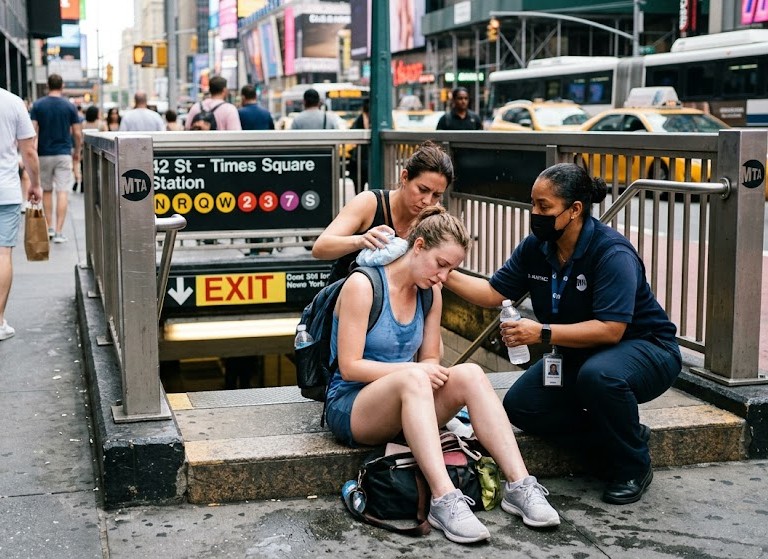
In heat stroke, the body temperature exceeds 40 degrees Celsius (104 degrees Fahrenheit) and coma or seizure may follow. Heart attack and death may also occur. Heat stroke is an extremely serious condition.
Who is Most at Risk?
Certain people may be at higher risk of suffering from heat exhaustion. If you fall into one of the following groups, you should be especially cautious when outdoors in hot weather:
- you are already dehydrated (i.e., have had vomiting or diarrhea, or have been unable to drink enough fluids)
- you are drinking beverages containing alcohol
- you are elderly
- you have chronic respiratory disease
- you are obese or overweight
- you have hypertension (high blood pressure)
- you are pregnant
- you have chronic heart disease
- you are working outdoors performing physical labor
- you are taking medications that may interfere with your body’s ability to cool itself (i.e., beta-blockers, tranquilizers, antihistamines)
How to Prevent Heat Stroke
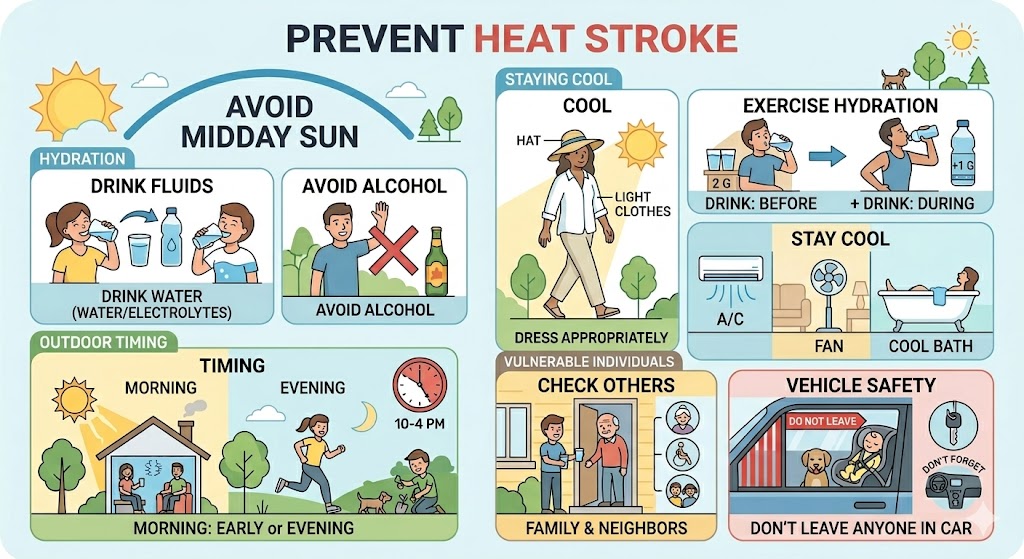
The best offense is a good defense- try to avoid the sun during the hottest part of the day whenever possible.
If you must be outdoors:
- drink more fluids than normal, and ensure that you are not drinking fluids that don’t contain any sodium at all
- check on elderly friends and neighbors and those who may be vulnerable to the heat regularly to ensure they are staying cool and are not victims of the heat
- avoid drinking alcohol if you must be out in the sun
- if you must do chores outdoors, wait until it is cooler out before venturing outdoors (i.e., early morning or evening hours)
- dress appropriately in cool clothing
- if exercising outdoors, drink 2 glasses of water prior to exercising and a glass of water every 20 to 30 minutes thereafter
- take cool baths if you are feeling overheated
- use fans indoors if you don’t have air conditioning
- remember never to leave anyone who is vulnerable (babies, the elderly, small children or disabled individuals) in vehicles in the heat
What to do if you think you have heat exhaustion:
If you think you, or someone else, may have heat exhaustion, get to a cool place out of the heat. Remove any excessive clothing. You can place ice packs on the back of the neck and head and in the armpits and groins-this will cool the body quickly. You can also use fans or a cool bath to lower body temperature (do not put someone who is not fully conscious in the tub and leave them unattended). Replenish fluid loss by drinking water, naturally sweetened fruit juices or sports drinks.
If you or the person you are treating do not feel better after 20 minutes, you should be seen by a medical professional. If the person is semi-conscious or fully unconscious call an ambulance for immediate assistance.
If you come to see me in the clinic with symptoms of heat exhaustion, I will assess your temperature, pulse, respirations and blood pressure. I will examine you for signs and symptoms of dehydration. I may order diagnostic tests such as blood work or a urine test to assess the extent of dehydration. I may also use cooling measures to bring your body temperature down.
The best way to avoid heat exhaustion and heat stroke is to avoid the heat as much as possible. If you or someone you know are experiencing symptoms of heat exhaustion, call for an immediate appointment.
Make an Appointment
We see patients by appointment only. We are not a walk-in clinic, hospital or urgent care facility.
Flu Shots / Pneumonia Vaccines
Hepatitis Vaccine
Skin Tag Removal
Warts
Toe Fungus Treatment
Eczema
Acne
Psoriasis
Blood Pressure / Hypertension management
Cholesterol management
Irregular Heartbeat
Congestive Heart Failure (CHF)
Atrial Fibrillation
Angina
Pap Smears
Urinary Tract Infection / Bladder Infection
Menstrual Problems
Menopause
Yeast Infections
Enlarged Prostate
Arthritis
Osteoporosis
Alzheimer’s Disease
Coughs
Pneumonia
COPD (Chronic Obstructive Pulmonary Disease)
Heartburn
Hemorrhoids (piles)
Constipation
Diarrhea
Vomiting (Nausea, Upset Stomach)
Irritable Bowel Syndrome (IBS)
Abdominal pain
Inflammatory Bowel Disease (Crohn’s disease, Ulcerative Colitis)
Dizziness
Migraine Headaches
Shingles
Trigeminal Neuralgia
Tennis Elbow
Back Pain
Rheumatoid Arthritis
Sinusitis
Ear infections
Sore Throat (Pharyngitis)
Pink Eye (Conjunctivitis)
Urinary Incontinence
Urinary Tract Infection / Bladder Infection
Work Physicals / Pre-Employment Physicals & Screenings
School Physicals for College
Asthma Control
Diabetes Management
Hypertension
Prediabetes
Tetanus Vaccination
Dog Bites
Heat Exhaustion
Burns
Remove Sutures (Stitches/Staples)
Incision and Drainage
Sprains & Strains
Sonograms
Breathing Test / Spirometry
Electrocardiograms (ECG / EKG)
Urinalysis
Blood tests (cholesterol, blood glucose, complete blood count, thyroid testing and others)
Work Injuries
Auto Accidents
Botox
Dermal Fillers
Dysport
Depression
Insurance We Accept
- 1199SEIU
- Aetna
- Blue Cross Blue Shield
- Cigna
- Emblem
- Fidelis
- GHI
- Health Republic
- HIP
- MagnaCare
- Medicaid
- Medicare
- No-Fault Insurance
- Oscar
- Oxford
- The Empire Plan
- UnitedHealthcare
- VNS Choice
*If you don’t see your insurance here please call (718) 942-4600