

How I Can Help Treat Shingles (Herpes Zoster)

“Shingles is an extremely painful condition that can result in a chronic pain syndrome called postherpetic neuralgia. If you think you may have shingles it is important to seek help. Antiviral medication given in the first few days can reduce the risk of neuralgia. Don’t wait if you have symptoms of shingles- make an appointment right away and come in to see me”.
-Dr. Bella Zimilevich, MD
What is shingles?
Shingles is a reactivation of the same virus that causes chickenpox (varicella zoster virus). Once you have had chickenpox, the virus goes dormant, hiding in the nerve tissue surrounding your brain and spinal cord. Many years later, the virus can reactivate, causing the condition known as shingles. Although shingles is more common after age 60, people of any age can get shingles if they have had chickenpox. The condition is very common, affecting almost 1/3 of the population at some point in their lives. You should know that although shingles is caused by a type of herpes virus, it is not the same herpes virus that causes genital herpes, the sexually transmitted infection.
What are the symptoms of shingles?
Pain is often the first symptom of shingles and may occur before the rash makes its appearance. The pain is often described as burning in nature. Skin in the affected area may be hypersensitive, so that even clothing rubbing against the area will be painful. The pain may precede the rash by several days to a week.
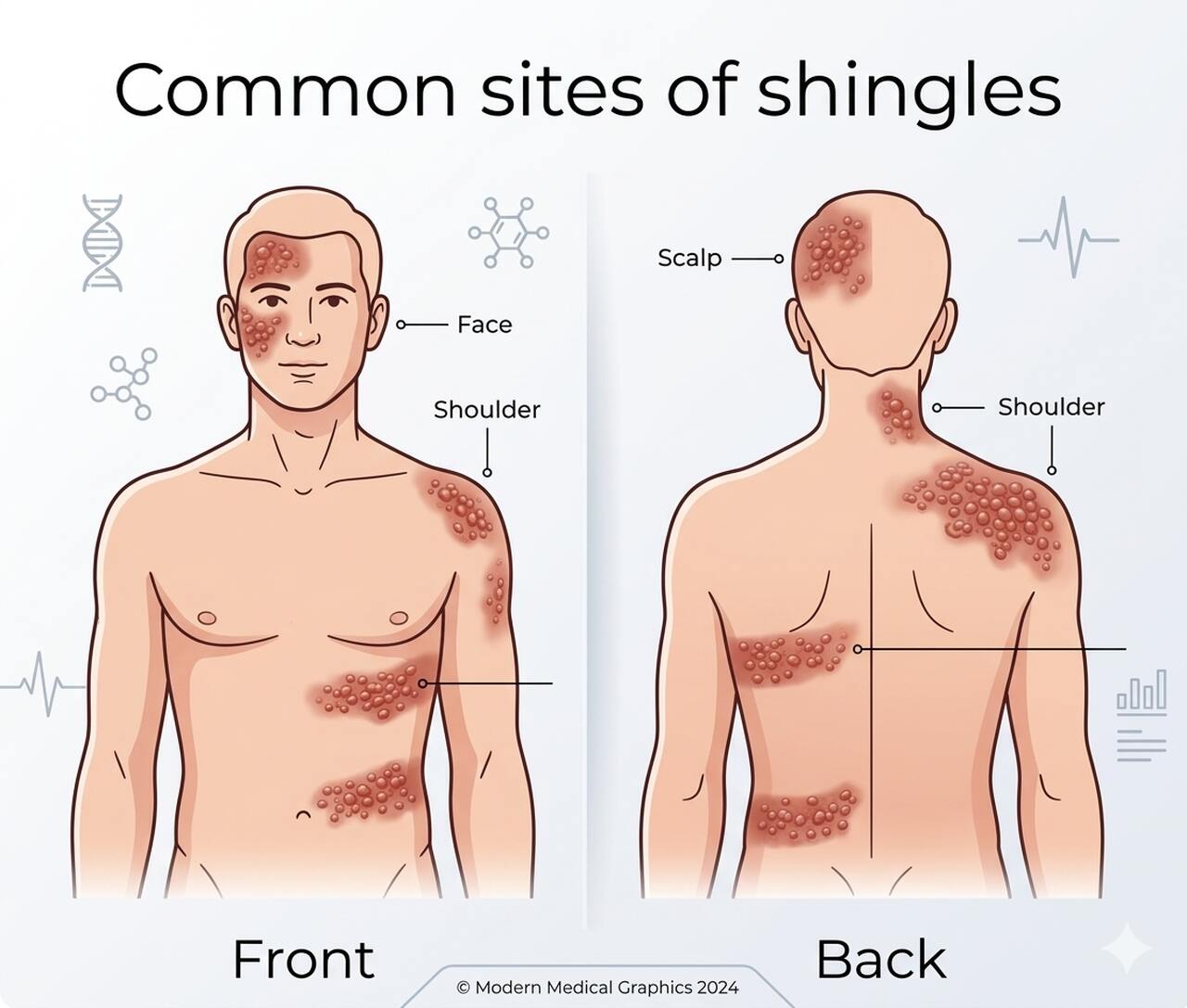
When the rash appears, it will look like tiny blisters on top of a reddened base. New blisters may continue to form for up to 5 days.
The rash follows a dermatome (the path of an individual nerve as it comes out of the spinal cord), creating a band-like pattern.
The rash usually occurs on only one side of the spinal cord. Rarely, more than one nerve will be affected, but usually a single nerve is affected.
The blisters eventually rupture and they will ooze and crust before they heal, much like chickenpox. The condition may last 3 to 4 weeks from the beginning symptoms until resolution of the rash.
Is shingles contagious?
Yes, but not in the way you might think! People who have shingles can pass the virus on to individuals who have never had chickenpox, or who have never been vaccinated for chickenpox, and these unlucky people will get chickenpox, not shingles. They may develop shingles at a later time, but they won’t get shingles from contact with someone who has it.
Can shingles cause complications?
Yes. Although most people with shingles recover completely, complications sometimes occur. Shingles may affect the eye when nerves of the face are involved. This can be very serious and may lead to vision loss. Hearing can also be affected, as can the facial nerves, leading to facial paralysis on the affected side.
The most dreaded (and most common) complication of shingles is postherpetic neuralgia, in which the pain of shingles lingers long after the rash has subsided. The pain can be severe and debilitating. This is why it is important to seek help immediately if you suspect you may have shingles, as treatment with antiviral medications in the first 72 hours of symptoms may reduce the risk of this devastating complication.
Is there a vaccine for shingles?
Yes. There is a vaccine for adults over the age of 50 who have had chickenpox. The vaccine has been found to reduce the occurrence of shingles and significantly reduces symptoms, including the incidence of postherpetic neuralgia. If you get the vaccine and still develop shingles, you will likely have a much less severe case.
What can I expect when I come in to see you?
If you come in to see me with symptoms of shingles, I will first need to know a little about your past medical history. I will also want to know what medications you are taking and if you have any allergies to medications. I will want to know if you have any medical conditions that affect your immune system (and thus your ability to fight off infection).
I will ask you when your symptoms started. If you have pain, where is the pain located and when did it start? Does the pain come and go? What is the character of the pain? Is it sharp, stabbing, dull, aching or something else? Is there anything that makes the pain better or worse?
If you have a rash, I will need to examine your rash. I will look for the tell-tale blisters along a nerve distribution, which is characteristic of shingles.
Usually your symptoms, along with the characteristic appearance of your rash, is enough to make the diagnosis. If I believe that you have shingles and it has been less than 72 hours since your symptoms started, I will prescribe an antiviral medication. The medication will lessen the severity of your symptoms and hopefully shorten the duration of symptoms. If you have shingles on your face that may affect your eye, I may send you to an eye specialist.
If you have symptoms of shingles, you should make an appointment to see me immediately. Diagnosing and treating shingles as soon as symptoms start is the best way to limit the symptoms of this painful condition.
Make an Appointment
We see patients by appointment only. We are not a walk-in clinic, hospital or urgent care facility.
Flu Shots / Pneumonia Vaccines
Hepatitis Vaccine
Skin Tag Removal
Warts
Toe Fungus Treatment
Eczema
Acne
Psoriasis
Blood Pressure / Hypertension management
Cholesterol management
Irregular Heartbeat
Congestive Heart Failure (CHF)
Atrial Fibrillation
Angina
Pap Smears
Urinary Tract Infection / Bladder Infection
Menstrual Problems
Menopause
Yeast Infections
Enlarged Prostate
Arthritis
Osteoporosis
Alzheimer’s Disease
Coughs
Pneumonia
COPD (Chronic Obstructive Pulmonary Disease)
Heartburn
Hemorrhoids (piles)
Constipation
Diarrhea
Vomiting (Nausea, Upset Stomach)
Irritable Bowel Syndrome (IBS)
Abdominal pain
Inflammatory Bowel Disease (Crohn’s disease, Ulcerative Colitis)
Dizziness
Migraine Headaches
Shingles
Trigeminal Neuralgia
Tennis Elbow
Back Pain
Rheumatoid Arthritis
Sinusitis
Ear infections
Sore Throat (Pharyngitis)
Pink Eye (Conjunctivitis)
Urinary Incontinence
Urinary Tract Infection / Bladder Infection
Work Physicals / Pre-Employment Physicals & Screenings
School Physicals for College
Asthma Control
Diabetes Management
Hypertension
Prediabetes
Tetanus Vaccination
Dog Bites
Heat Exhaustion
Burns
Remove Sutures (Stitches/Staples)
Incision and Drainage
Sprains & Strains
Sonograms
Breathing Test / Spirometry
Electrocardiograms (ECG / EKG)
Urinalysis
Blood tests (cholesterol, blood glucose, complete blood count, thyroid testing and others)
Work Injuries
Auto Accidents
Botox
Dermal Fillers
Dysport
Depression
Insurance We Accept
- 1199SEIU
- Aetna
- Blue Cross Blue Shield
- Cigna
- Emblem
- Fidelis
- GHI
- Health Republic
- HIP
- MagnaCare
- Medicaid
- Medicare
- No-Fault Insurance
- Oscar
- Oxford
- The Empire Plan
- UnitedHealthcare
- VNS Choice
*If you don’t see your insurance here please call (718) 942-4600