

Inflammatory Bowel Disease (Crohn’s disease, Ulcerative Colitis)

“The symptoms of inflammatory bowel disease can be debilitating and can negatively impact quality of life. If you have inflammatory bowel disease, you will need a physician who can coordinate your care with a gastroenterologist and work with you to manage your condition, so that you can live as symptom free as possible!“
-Dr. Bella Zimilevich, MD
What is inflammatory bowel disease (IBD)?
In inflammatory bowel disease, parts of the bowel become inflamed. There are two main types of IBD:
- ulcerative colitis- ulcerative colitis usually develops slowly over time and involves continuous segments of the rectum and colon (large intestine). Usually the innermost lining is affected.
- Crohn’s disease- in Crohn’s disease, inflammation may occur anywhere in the small and large intestines. Inflammation may involve deep layers of the bowel
What are the symptoms of inflammatory bowel disease?
Symptoms are a little different for ulcerative colitis and Crohn’s disease, although they may share some symptom:
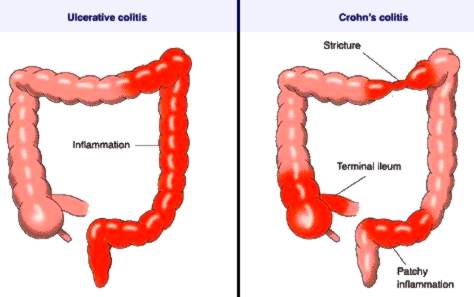
- ulcerative colitis- symptoms of ulcerative colitis may vary according to the areas of the large bowel affected. Symptoms are mildest when only the rectum is involved, causing rectal pain, bleeding and a sense of urgency surrounding bowel movements (ulcerative proctitis). Sometimes rectal bleeding is the only symptom experienced. When greater segments of the colon is involved, symptoms may include bloody diarrhea, abdominal pain and cramping, tiredness and unintended weight loss. Bouts of illness may alternate with periods of wellness (remission).
- Crohn’s disease- in addition to abdominal pain and cramping, diarrhea, blood in the stool, decreased appetite and malnutrition due to the inability of diseased bowel to absorb nutrients (remember, the small bowel can be involved in Crohn’s, which is where nutrients are absorbed), Crohn’s is a systemic disease that can affect other body systems. Individuals with Crohn’s may also have fever, rashes, fatigue, arthritis and inflammation affecting the eyes. As with ulcerative colitis, people with Crohn’s disease may experience periods of remission when their symptoms disappear.
What causes inflammatory bowel disease?

No one really knows. Researchers believe that both disorders may be an autoimmune response.
It is also possible that heredity may play a role, as people who have family members with IBD are more likely to develop one of these disorders.
Risk factors for IBD include:
- age- most people with IBD are under the age of 30, but IBD develops later in some individuals (50s and 60s)
- cigarette smoking- smoking can make your symptoms worse and increases the risk of complications
- NSAID use- using non-steroidal antiinflammatory agents, such as ibuprofen or Naproxen, can cause ulceration in the GI tract and may worsen IBD. Tylenol is safe to use.
- ethnicity- Caucasians and people of Jewish descent have a higher prevalence of IBD
- family history- as mentioned, having someone in your family diagnosed with the condition raises your risk
What can I expect when I come to see you?
When you come in to see me with gastrointestinal symptoms that suggest inflammatory bowel disease, I will need to know a little about your past medical history, your family medical history and what drugs you are currently taking, if any.
Next, I’ll ask you about your symptoms. I may ask you about:
- pain- where is it located? does it come and go? is the pain related to bowel movements? on how many days of the past month did you experience abdominal pain?
- bowel habits- are you experiencing diarrhea? constipation? how often do your bowels move and what is the consistency of your bowel movements?
- blood in the stool- is there fresh blood only when you wipe, is the blood mixed in the stool, or is there blood in the toilet water?
- weight loss- have you lost weight unintentionally? how much weight do you estimate you have lost?
- fever- have you been experiencing any fever?
- other symptoms- have you experienced other symptoms, such as rash, joint pain or eye inflammation?
Although these questions may make you squeamish, remember that the more information I have, the better and more accurately I can diagnose you. Please don’t feel embarrassed- I am a doctor and chances are I have heard it before!
I will need to examine you and may ask you to change into a gown. I may weigh you to get a baseline weight. I will listen to your abdomen for abnormal bowel signs. I will also gently press your abdomen in several places to see if I can feel any abnormal masses and to determine what areas are tender when I press on them.
I will likely order diagnostic tests, such as blood work to check for anemia and inflammation, as well as malnutrition if you have lost weight. I may order an abdominal x-ray. If I feel your symptoms are consistent with inflammatory bowel disease, I may order a colonoscopy, which is a test that uses a scope to view the inside of the bowel (you are sedated throughout the exam). If necessary, I will refer you to a gastroenterologist.
If you are suffering with symptoms that may be IBD, you need to come in and see me as soon as possible. The longer you wait, the more damage that may be done to your intestines. Don’t delay- make an appointment today.
Make an Appointment
We see patients by appointment only. We are not a walk-in clinic, hospital or urgent care facility.
Flu Shots / Pneumonia Vaccines
Hepatitis Vaccine
Skin Tag Removal
Warts
Toe Fungus Treatment
Eczema
Acne
Psoriasis
Blood Pressure / Hypertension management
Cholesterol management
Irregular Heartbeat
Congestive Heart Failure (CHF)
Atrial Fibrillation
Angina
Pap Smears
Urinary Tract Infection / Bladder Infection
Menstrual Problems
Menopause
Yeast Infections
Enlarged Prostate
Arthritis
Osteoporosis
Alzheimer’s Disease
Coughs
Pneumonia
COPD (Chronic Obstructive Pulmonary Disease)
Heartburn
Hemorrhoids (piles)
Constipation
Diarrhea
Vomiting (Nausea, Upset Stomach)
Irritable Bowel Syndrome (IBS)
Abdominal pain
Inflammatory Bowel Disease (Crohn’s disease, Ulcerative Colitis)
Dizziness
Migraine Headaches
Shingles
Trigeminal Neuralgia
Tennis Elbow
Back Pain
Rheumatoid Arthritis
Sinusitis
Ear infections
Sore Throat (Pharyngitis)
Pink Eye (Conjunctivitis)
Urinary Incontinence
Urinary Tract Infection / Bladder Infection
Work Physicals / Pre-Employment Physicals & Screenings
School Physicals for College
Asthma Control
Diabetes Management
Hypertension
Prediabetes
Tetanus Vaccination
Dog Bites
Heat Exhaustion
Burns
Remove Sutures (Stitches/Staples)
Incision and Drainage
Sprains & Strains
Sonograms
Breathing Test / Spirometry
Electrocardiograms (ECG / EKG)
Urinalysis
Blood tests (cholesterol, blood glucose, complete blood count, thyroid testing and others)
Work Injuries
Auto Accidents
Botox
Dermal Fillers
Dysport
Depression
Insurance We Accept
- 1199SEIU
- Aetna
- Blue Cross Blue Shield
- Cigna
- Emblem
- Fidelis
- GHI
- Health Republic
- HIP
- MagnaCare
- Medicaid
- Medicare
- No-Fault Insurance
- Oscar
- Oxford
- The Empire Plan
- UnitedHealthcare
- VNS Choice
*If you don’t see your insurance here please call (718) 942-4600