

Medical Appointments For Constipation (Irregular Bowel Movements, Hard Stools)

“Constipation is an embarrassing topic for many people, although it is very common. It can cause abdominal discomfort, nausea and loss of appetite. If left untreated, severe constipation can lead to mechanical obstruction. If you suffer from frequent or chronic constipation, you want to be sure that there is not an underlying problem causing your constipation. Make an appointment to see me so that I can help you get your bowels back on the right track”.
-Dr. Bella Zimilevich, MD
Constipation defined
The definition of constipation varies from person to person. While some people may have a bowel movement every single day, others may go 2 or 3 days between bowel movements and feel just fine. Therefore, constipation can be defined as less than 3 stools (bowel movements) per week and/or difficulty passing stools. If you are going every day or two but have to strain to pass very hard stools, you are constipated!
What causes constipation?
The list of conditions that can cause constipation is long. The following are some of the more common causes:
- dehydration/not drinking enough fluids- when your body is low on fluids, your intestines will draw more fluid from stools (or add less water to stools), making them harder to pass
- not enough fiber in your diet- many of us fail to eat enough fiber in our diets (women should consume about 21 to 25 grams of fiber; men should consume about 35 to 38 grams of fiber per day)
- sedentary lifestyle- older people and people who do not get enough exercise are more likely to become constipated
- medications- many medications can cause constipation, including narcotic pain medications, certain blood pressure medications, antidepressants and others
- ignoring the urge to “go”/delaying the urge- sometimes we ignore the urge to have a bowel movement because it isn’t convenient (i.e., you’re too busy at work to stop what you are doing); ignoring the urge may lead to constipation

- changes in routine/lifestyle- pregnancy, aging, travel and other changes in your regular routine can lead to constipation
- laxative abuse- ironically, using laxatives too often can lead to a lazy bowel that won’t work well without more laxatives, thus creating a viscious cycle that can be difficult to break
- specific medical conditions- stroke, diabetes, Multiple Sclerosis, Parkinson’s disease and other health conditions can affect bowel movements
- bowel problems- diverticulosis, bowel obstruction and other bowel conditions may have constipation as one of the major symptoms
- IBS– IBS is a functional bowel disorder that results in diarrhea, constipation or a combination of the two; IBS is a functional bowel disorder which is very common
- hormonal disturbance- thyroid gland dysfunction and other disorders of the glands may cause constipation
- spinal cord injury- many spinal cord injury patients suffer from constipation due to damage to nerves that innervate the bowel
- hemorrhoids/anal fissures- painful rectal or anal conditions may cause constipation because these conditions are painful, and sufferers may be reluctant to have a bowel movement due to pain; in addition, anal sphincter muscles may spasm, making it difficult to have a bowel movement
What symptoms can be caused by constipation?
As we discussed, passing fewer than 3 stools per week or passing hard stools/straining at stools are part and parcel of constipation. If you are constipated, you might also experience:
- a sensation of stool in the rectum/rectal blockage
- a sense of incomplete evacuation
- bloating/cramping/abdominal discomfort
- mild nausea
These symptoms are common in constipation. If you are frequently constipated, you should make an appointment to see me in the clinic.
What symptoms might signal a more serious problem?
If you are constipated and experience any of the following symptoms, you should come in as soon as possible to be assessed:
- blood in your stool
- weight loss
- fever
- vomiting
- inability to pass flatus (gas)
- severe abdominal pain
- increasing abdominal girth (your abdomen seems to be growing steadily and you’re not pregnant)
- thin, ribbon-like stools
- pain in the rectum
What can I expect at my appointment?
When you come to see me complaining of constipation, I’ll ask about your bowel habits. I will want to know how often you have a bowel movement, whether your stools are hard and whether you have to strain to pass stools. I’ll want to know if you have any medical problems that may be causing constipation. Please bring all of your medications (or a list of your medications) if I am seeing you for the first time so that I can rule out any medications as being to blame. I will also want to know how often you exercise and how may cups of water/how much fluid you drink in a day.
I’ll want you to tell me about your typical diet so that we can determine whether lack of fiber may be contributing to the problem. You can estimate the number of servings of fruits, vegetables and grains you eat in a day. Better yet, keep a food diary for a week prior to your visit- this can really be helpful to me to help me pinpoint how you can improve your diet.
I may want to examine your abdomen so that I can see if any areas are tender or any masses are present. Blood work, abdominal x-rays and other tests may rule out any serious problems, allowing me to focus on lifestyle remedies and possibly medications to treat your constipation.
Home remedies for constipation
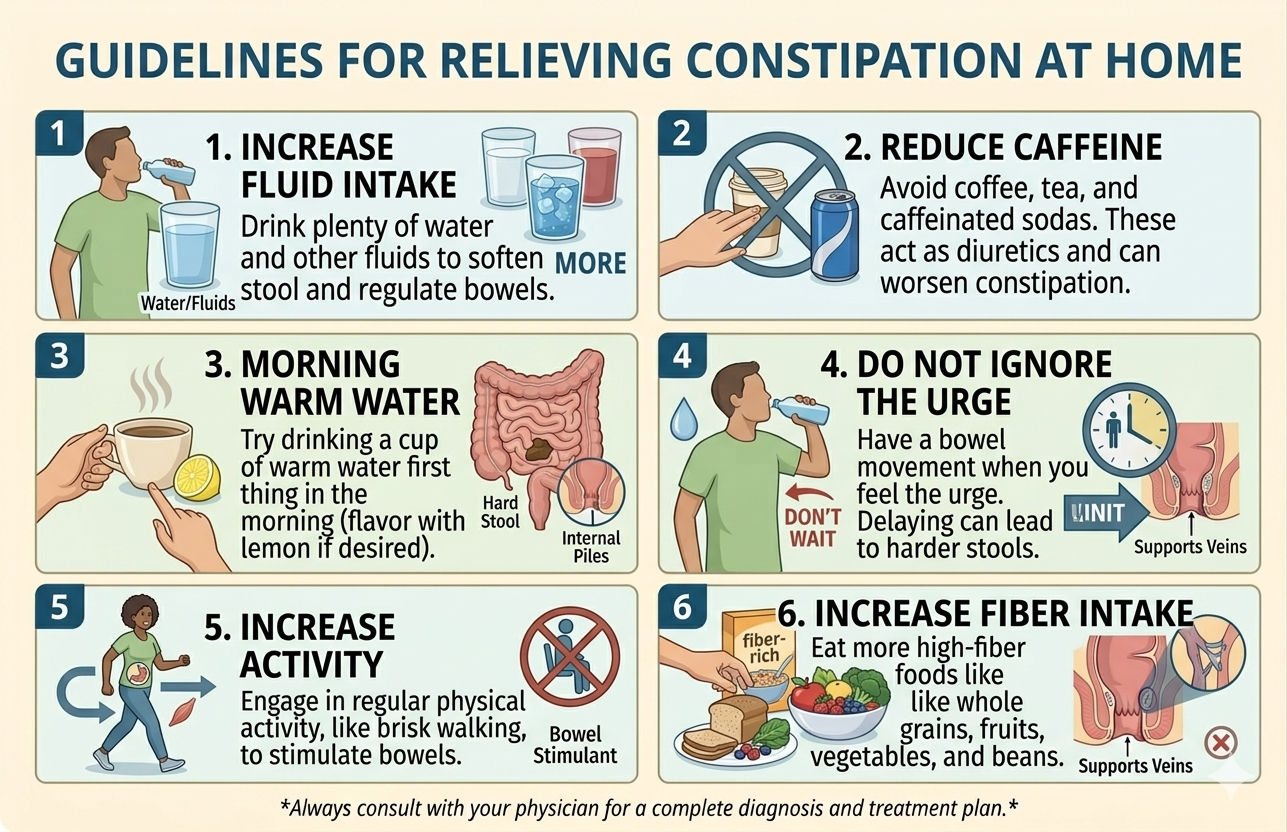
If you suffer from constipation, there are several things you can do to try to regulate your bowels:
- increase the amount of water/fluids you are drinking
- avoid caffeine and caffeinated beverages, as these may worsen constipation (caffeine is a mild diuretic)
- try drinking a cup of warm water first thing in the morning (you can flavor with lemon if desired)
- do not ignore the urge to have a bowel movement
- increase your activity- walking is an excellent bowel stimulant
- increase the amount of fiber you are eating
If none of the above remedies help you achieve more regular bowel habits and you are still constipated, make an appointment to come in and see me in the clinic. Together, we’ll get to the “bottom” of your constipation.
Make an Appointment
We see patients by appointment only. We are not a walk-in clinic, hospital or urgent care facility.
Flu Shots / Pneumonia Vaccines
Hepatitis Vaccine
Skin Tag Removal
Warts
Toe Fungus Treatment
Eczema
Acne
Psoriasis
Blood Pressure / Hypertension management
Cholesterol management
Irregular Heartbeat
Congestive Heart Failure (CHF)
Atrial Fibrillation
Angina
Pap Smears
Urinary Tract Infection / Bladder Infection
Menstrual Problems
Menopause
Yeast Infections
Enlarged Prostate
Arthritis
Osteoporosis
Alzheimer’s Disease
Coughs
Pneumonia
COPD (Chronic Obstructive Pulmonary Disease)
Heartburn
Hemorrhoids (piles)
Constipation
Diarrhea
Vomiting (Nausea, Upset Stomach)
Irritable Bowel Syndrome (IBS)
Abdominal pain
Inflammatory Bowel Disease (Crohn’s disease, Ulcerative Colitis)
Dizziness
Migraine Headaches
Shingles
Trigeminal Neuralgia
Tennis Elbow
Back Pain
Rheumatoid Arthritis
Sinusitis
Ear infections
Sore Throat (Pharyngitis)
Pink Eye (Conjunctivitis)
Urinary Incontinence
Urinary Tract Infection / Bladder Infection
Work Physicals / Pre-Employment Physicals & Screenings
School Physicals for College
Asthma Control
Diabetes Management
Hypertension
Prediabetes
Tetanus Vaccination
Dog Bites
Heat Exhaustion
Burns
Remove Sutures (Stitches/Staples)
Incision and Drainage
Sprains & Strains
Sonograms
Breathing Test / Spirometry
Electrocardiograms (ECG / EKG)
Urinalysis
Blood tests (cholesterol, blood glucose, complete blood count, thyroid testing and others)
Work Injuries
Auto Accidents
Botox
Dermal Fillers
Dysport
Depression
Insurance We Accept
- 1199SEIU
- Aetna
- Blue Cross Blue Shield
- Cigna
- Emblem
- Fidelis
- GHI
- Health Republic
- HIP
- MagnaCare
- Medicaid
- Medicare
- No-Fault Insurance
- Oscar
- Oxford
- The Empire Plan
- UnitedHealthcare
- VNS Choice
*If you don’t see your insurance here please call (718) 942-4600