

How We May Be Able to Help Treat Your Psoriasis

“Psoriasis symptoms can be mild and more of a nuisance than anything, or it may be severe and disabling. It can also be a major cosmetic concern. If you think you may have psoriasis, treatment is available to improve your symptoms and the appearance of your skin”.
-Dr. Bella Zimilevich, MD
What is psoriasis?
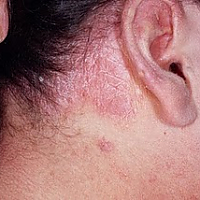
Psoriasis is a chronic disease which causes the skin cells to build up very rapidly, resulting in red, dry and itchy patches that can be quite sore, or thick silvery-colored scales. The disease may have periods of remission during which symptoms are almost non-existent, alternating with periods in which you have a “flare” of symptoms. The condition is often associated with arthritis. When arthritis is present, symptoms can be quite severe.
What are the symptoms of psoriasis?
- dry and cracked skin that is prone to bleeding
- itching or burning areas of the skin
- small spots that form scales
- reddened patches of skin that may eventually form silvery-colored scales
- pain and stiffness in the joints
- discoloration, thickening and/or pitting of the nailbed
As mentioned, these symptoms may be relatively mild or severe, and symptoms may come and go.
What causes psoriasis?
No one fully understands what causes psoriasis. It is believed to be an autoimmune disease, meaning that the body attacks itself- in this case, the body attacks the skin. It seems that some people are genetically susceptible to psoriasis. It is possible that elements of the environment also play a role in psoriasis.
Our body contains cells called T cells. T cells are responsible for helping us to fight off infections. In psoriasis, the T cells mistakenly target the skin and cause skin cells to build up far too quickly. Normally it takes weeks for a skin cell to move to the outermost layer of the skin where it can be shed. In psoriasis, skin cells are created more quickly, and they also travel to the outer layer of the skin too quickly, where they build up into scales on the surface of the skin. What causes the T cells to malfunction is somewhat of a mystery.
Triggers for psoriasis
If you have psoriasis, certain things may cause the disease to flare, or make your symptoms worse:
- an injury to the skin, such as sunburn or a skin infection
- medications such as blood pressure medications, iodides and lithium (used to treat a mental health condition known as bipolar disorder)
- exposure of the skin to the cold/cold weather
- alcohol consumption (in large amounts)
- smoking
- infections (thrush, strep throat)
- infections (thrush, strep throat)
Are there complications associated with psoriasis?
Yes. If you scratch affected skin, you may develop a bacterial skin infection. If you have psoriatic arthritis, your joints may eventually become damaged.
Possibly the worst part about having psoriasis for many people is the cosmetic aspect of the disease. People with severe psoriasis may have low self-esteem due to their feelings about their appearance.
This may lead to stress, anxiety and depression. Some people with severe psoriasis may even isolate themselves because of how they feel about their appearance.
What can I expect if I come in for an appointment?
If you think that you may have psoriasis, you should make an appointment. You need a proper diagnosis before any treatment can be prescribed.
When you come in to see me, I will want to know about your past medical history, any allergies you have and what medications you are currently taking (if any). I will also want to know when you began experiencing symptoms, whether your symptoms are continuous or seem to come and go and what (if anything) makes your symptoms worse or better.
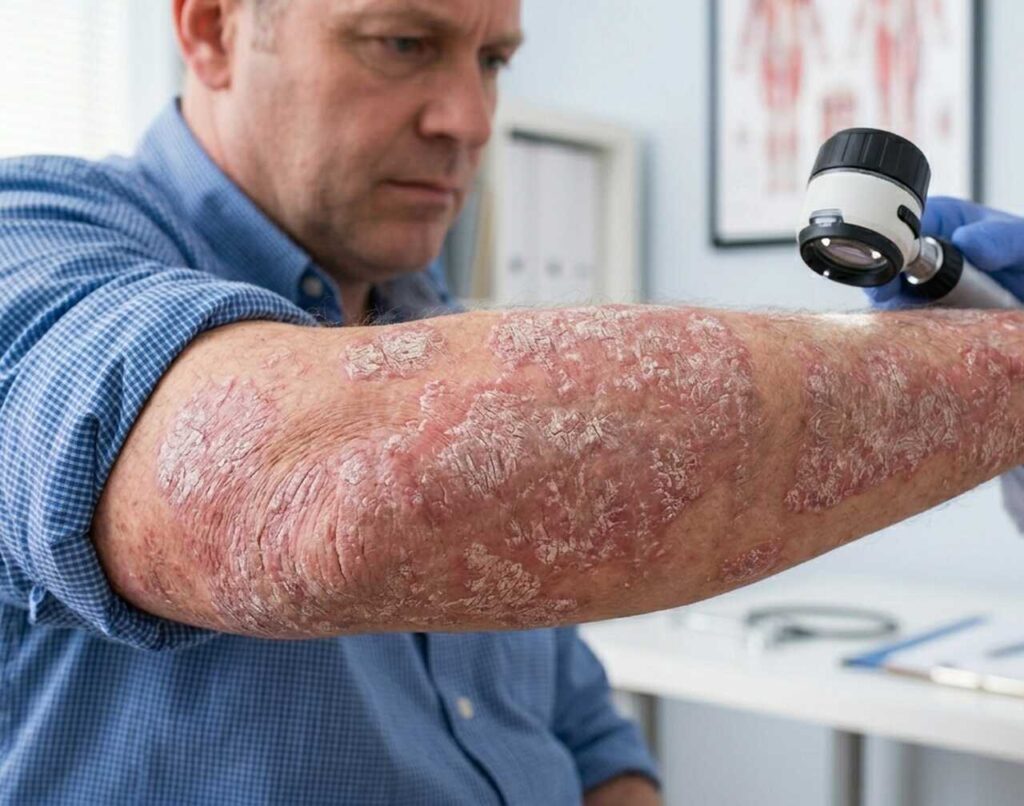
Once I have obtained your history, I’ll take a look at the affected area(s) of skin, looking for redness, dryness, cracking of the skin, weeping, crusting and other signs and symptoms. Psoriasis can sometimes look like other skin conditions such as atopic dermatitis, so I will need to look closely.
Treatment of psoriasis
Treatment of psoriasis may include creams or ointments applied to the skin, oral or injected medications and light therapy.
- creams/ointments (topical therapy)– if you have mild to moderate psoriasis, a medicated cream or ointment may control your symptoms and provide relief. Topical steroid creams, retinoid creams and coal tar are common topical therapies used to treat psoriasis.
- oral/injected medications– these treatments are used for moderate or severe psoriasis, especially if arthritis is present. These medications can cause serious side effects, so they may be used in short bursts or combined with other therapies.
- light therapy (phototherapy)– psoriasis may be treated with natural or artificial ultraviolet light; phototherapy may be combined with medication to increase effectiveness
If you think you have psoriasis, your first step is to make an appointment to come in and see me, particularly if you also have signs and symptoms of arthritis. I will work with you to get you a proper diagnosis. If necessary, I will refer you to a dermatologist. Psoriasis needs ongoing treatment and close monitoring to prevent complications. Make your appointment today.
Make an Appointment
We see patients by appointment only. We are not a walk-in clinic, hospital or urgent care facility.
Flu Shots / Pneumonia Vaccines
Hepatitis Vaccine
Skin Tag Removal
Warts
Toe Fungus Treatment
Eczema
Acne
Psoriasis
Blood Pressure / Hypertension management
Cholesterol management
Irregular Heartbeat
Congestive Heart Failure (CHF)
Atrial Fibrillation
Angina
Pap Smears
Urinary Tract Infection / Bladder Infection
Menstrual Problems
Menopause
Yeast Infections
Enlarged Prostate
Arthritis
Osteoporosis
Alzheimer’s Disease
Coughs
Pneumonia
COPD (Chronic Obstructive Pulmonary Disease)
Heartburn
Hemorrhoids (piles)
Constipation
Diarrhea
Vomiting (Nausea, Upset Stomach)
Irritable Bowel Syndrome (IBS)
Abdominal pain
Inflammatory Bowel Disease (Crohn’s disease, Ulcerative Colitis)
Dizziness
Migraine Headaches
Shingles
Trigeminal Neuralgia
Tennis Elbow
Back Pain
Rheumatoid Arthritis
Sinusitis
Ear infections
Sore Throat (Pharyngitis)
Pink Eye (Conjunctivitis)
Urinary Incontinence
Urinary Tract Infection / Bladder Infection
Work Physicals / Pre-Employment Physicals & Screenings
School Physicals for College
Asthma Control
Diabetes Management
Hypertension
Prediabetes
Tetanus Vaccination
Dog Bites
Heat Exhaustion
Burns
Remove Sutures (Stitches/Staples)
Incision and Drainage
Sprains & Strains
Sonograms
Breathing Test / Spirometry
Electrocardiograms (ECG / EKG)
Urinalysis
Blood tests (cholesterol, blood glucose, complete blood count, thyroid testing and others)
Work Injuries
Auto Accidents
Botox
Dermal Fillers
Dysport
Depression
Insurance We Accept
- 1199SEIU
- Aetna
- Blue Cross Blue Shield
- Cigna
- Emblem
- Fidelis
- GHI
- Health Republic
- HIP
- MagnaCare
- Medicaid
- Medicare
- No-Fault Insurance
- Oscar
- Oxford
- The Empire Plan
- UnitedHealthcare
- VNS Choice
*If you don’t see your insurance here please call (718) 942-4600