

Lumbar Muscle Strain (Lower Back Strain)

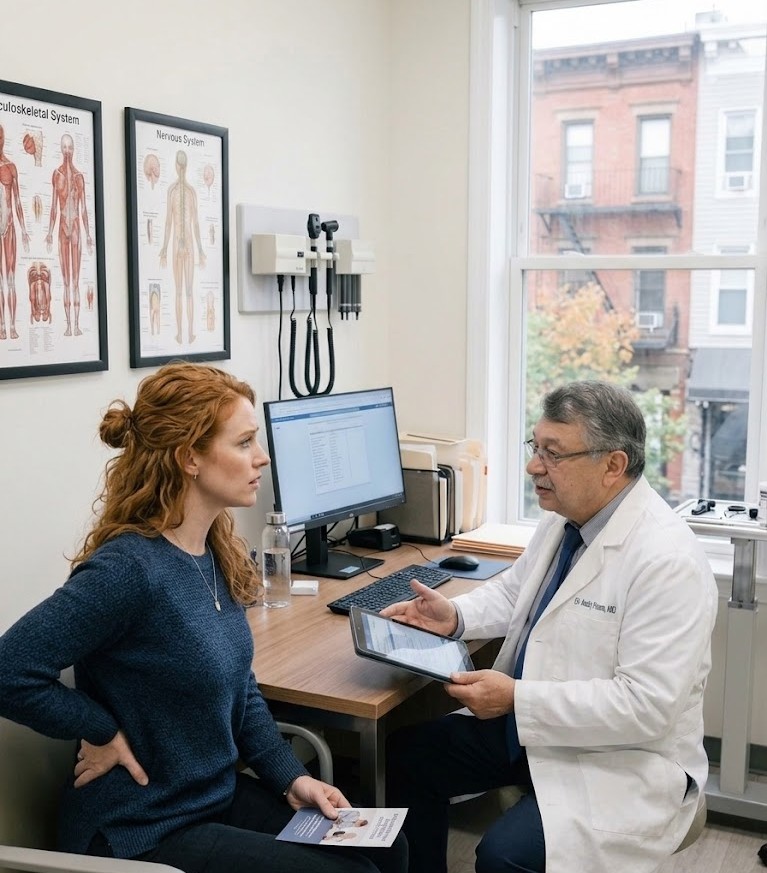
“Lower back strain is one of the most common causes of back pain, often resulting from lifting, sudden movement, or overuse. While many cases improve with proper care, untreated strain can lead to chronic pain and limited mobility. If you are experiencing persistent lower back pain, I can help diagnose the issue and guide you toward effective treatment so you can return to your normal activities as quickly as possible.”
-Dr. Anatoly Pisman, MD
What is a Lumbar Muscle Strain?
A lumbar muscle strain occurs when the muscles or ligaments in the lower back are stretched or torn, typically due to sudden movement, improper lifting, or repetitive stress. The lower back supports much of your body’s weight and is involved in nearly every movement, which makes it particularly vulnerable to injury. Strains can range from mild overstretching to more significant tissue damage, and symptoms may develop suddenly or gradually depending on the cause.
Common Causes of Lumbar Muscle Strain
Lumbar strains are often tied to everyday activities and habits. Improper lifting technique, sudden twisting motions, and overuse during physical activity are frequent causes.
Poor posture, especially from prolonged sitting or desk work, can also place ongoing stress on the lower back muscles.

In some cases, weak core muscles or lack of conditioning can make the back more susceptible to strain during routine movements.
Symptoms of Lower Back Strain
Patients with a lumbar strain typically experience localized pain in the lower back that may feel sharp or aching. The area may feel tight or stiff, and movement can worsen the discomfort. Some individuals notice muscle spasms or difficulty standing upright after sitting or bending. While the pain is usually confined to the lower back, more severe strains can limit mobility and interfere with normal daily activities.
When Should You See a Doctor for Lumbar Muscle Strain?
It is important to seek medical care if your symptoms are not improving or are becoming more severe.
Warning signs include:
- Pain lasting longer than 1–2 weeks or worsening over time
- Difficulty performing daily activities such as walking or standing
- Pain following an injury, fall, or accident
Early evaluation helps ensure that the issue is properly diagnosed and prevents a simple strain from developing into a more chronic condition.
Lumbar Muscle Strain Diagnosis & Testing
Diagnosis begins with a detailed discussion of your symptoms, how the injury occurred, and your medical history. A physical examination is performed to assess movement, muscle strength, and areas of tenderness. In many cases, this is enough to confirm a muscle strain.
If symptoms persist or there is concern about a more serious condition, additional testing may be recommended. This can include imaging such as X-rays or MRI to rule out structural problems, or EMG/NCV testing if there is a need to evaluate nerve function. The goal is to ensure an accurate diagnosis so that treatment can be targeted effectively.
Non-Surgical Treatment Options for Lumbar Muscle Strain
Most lumbar muscle strains respond well to conservative, non-surgical treatment. The focus is on relieving pain, restoring mobility, and preventing future injury.
Treatment options may include:
- Physical therapy and guided rehabilitation to strengthen the back and core
- Anti-inflammatory medications to reduce pain and swelling
- Targeted injections, such as trigger point injections, for persistent muscle pain
In addition to these treatments, patients are guided on posture, activity modification, and proper body mechanics to support long-term recovery.
What Can I Expect at My Visit?
During your visit, you will be asked about the onset of your pain, what activities affect it, and any treatments you have already tried.
A focused examination will help identify the source of the problem and determine the severity of the strain.
Based on this evaluation, a personalized treatment plan will be created to help you recover as quickly and safely as possible.
If you are experiencing lower back pain related to a muscle strain, making an appointment for evaluation is an important first step toward relief and recovery.
We see patients by appointment only. We are not a walk-in clinic, hospital or urgent care facility.
Tennis Elbow
Back Pain
Rheumatoid Arthritis
Lumbar Muscle Strain
Herniated Disc (Lumbar)
Sciatica
Degenerative Disc Disease
Spinal Stenosis (Lumbar)
Spondylolisthesis
Posture & Tech Neck
Thoracic Herniated Disc
Scoliosis & Kyphosis
Ankylosing Spondylitis
Fibromyalgia
Osteoporosis & Fractures
Radiculopathy
Peripheral Neuropathy
Carpal Tunnel Syndrome
Epidural Steroid Injections
Facet Joint Injections
PRP Therapy
Trigger Point Injections
EMG / NCV Testing
Botox Injections for Spasticity
Intrathecal Baclofen Pump Management
Post-Concussion Management
Custom Bracing (Orthotics)
Prosthetic Training & Rehab
Gait Analysis & Correction
Viscosupplementation (Gel Injections)
Percutaneous Tenotomy
Bursa Injections
Insurance We Accept
- 1199SEIU
- Aetna
- Blue Cross Blue Shield
- Cigna
- Emblem
- Fidelis
- GHI
- Health Republic
- HIP
- MagnaCare
- Medicaid
- Medicare
- No-Fault Insurance
- Oscar
- Oxford
- The Empire Plan
- UnitedHealthcare
- VNS Choice
*If you don’t see your insurance here please call (718) 942-4600