

Degenerative Disc Disease Treatment

“Degenerative disc disease occurs when the discs in your spine naturally wear down over time, causing pain, stiffness, and sometimes nerve irritation. While it is a common part of aging, symptoms can affect daily activities and mobility. With proper evaluation and targeted treatment, most cases can be managed without surgery. I can help guide you toward relief and long-term spinal health.”
-Dr. Anatoly Pisman, MD
What is Degenerative Disc Disease?
Degenerative disc disease refers to the gradual breakdown of spinal discs, which act as cushions between vertebrae.
Loss of disc height, hydration, and flexibility can lead to lower back pain, radiating leg pain, or nerve compression.
The condition often coexists with lumbar herniated discs or spinal stenosis, increasing discomfort and mobility challenges.
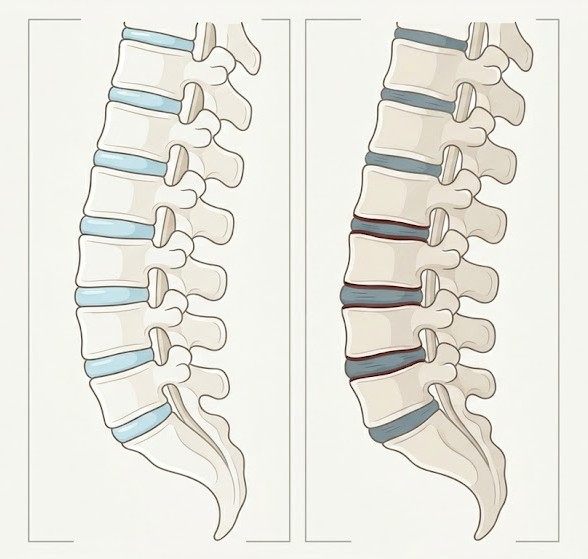
Common Causes
Disc degeneration occurs naturally with age but can be worsened by other factors:
Key contributors:
- Repeated stress on the spine from lifting, twisting, or poor posture
- Previous injuries or spinal trauma
- Genetic predisposition or lifestyle factors like smoking
Symptoms of Degenerative Disc Disease

Symptoms vary in severity, but early evaluation and a structured treatment plan can reduce pain, improve mobility, and prevent further degeneration.
Typical signs:
- Chronic lower back pain that may worsen with activity or prolonged sitting
- Radiating pain or numbness in the legs due to nerve involvement
When to Seek Medical Attention
Consult a doctor if pain persists, interferes with daily activities, or is accompanied by:
- Numbness, tingling, or weakness in the legs
- Difficulty standing, walking, or controlling bladder/bowel functions
Prompt evaluation can prevent worsening nerve compression and maintain spinal function.
Diagnosis & Testing
Diagnosis includes a physical examination, review of symptoms, and sometimes imaging such as MRI or CT scans to assess disc degeneration. EMG/NCV testing may be recommended if nerve symptoms are present.
Non-Surgical Treatment Options
Most cases are managed without surgery. Treatments may include:
- Physical therapy to strengthen supporting muscles, improve posture, and maintain spinal flexibility
- Epidural steroid injections or nerve blocks for inflammation and pain
- Activity modification and targeted medications
A personalized plan helps relieve pain, restore mobility, and support long-term spine health.
What to Expect at Your Visit
Your visit will include a review of your pain, a physical examination, and evaluation of nerve involvement. Based on your findings, a customized treatment plan will be developed to reduce discomfort, improve daily function, and prevent further degeneration.
We see patients by appointment only. We are not a walk-in clinic, hospital or urgent care facility.
Tennis Elbow
Back Pain
Rheumatoid Arthritis
Lumbar Muscle Strain
Herniated Disc (Lumbar)
Sciatica
Degenerative Disc Disease
Spinal Stenosis (Lumbar)
Spondylolisthesis
Posture & Tech Neck
Thoracic Herniated Disc
Scoliosis & Kyphosis
Ankylosing Spondylitis
Fibromyalgia
Osteoporosis & Fractures
Radiculopathy
Peripheral Neuropathy
Carpal Tunnel Syndrome
Epidural Steroid Injections
Facet Joint Injections
PRP Therapy
Trigger Point Injections
EMG / NCV Testing
Botox Injections for Spasticity
Intrathecal Baclofen Pump Management
Post-Concussion Management
Custom Bracing (Orthotics)
Prosthetic Training & Rehab
Gait Analysis & Correction
Viscosupplementation (Gel Injections)
Percutaneous Tenotomy
Bursa Injections
Insurance We Accept
- 1199SEIU
- Aetna
- Blue Cross Blue Shield
- Cigna
- Emblem
- Fidelis
- GHI
- Health Republic
- HIP
- MagnaCare
- Medicaid
- Medicare
- No-Fault Insurance
- Oscar
- Oxford
- The Empire Plan
- UnitedHealthcare
- VNS Choice
*If you don’t see your insurance here please call (718) 942-4600