

Lower Back Pain Treatment

“Lower back pain is one of the most common reasons people seek medical care. It can range from mild discomfort to severe, disabling pain that interferes with daily life. Whether your pain is caused by a strain, disc problem, or nerve irritation, early evaluation and treatment can help prevent it from becoming a chronic issue. If you are experiencing lower back pain, I encourage you to come in so we can identify the cause and begin appropriate treatment.”
-Dr. Anatoly Pisman, MD
What is Lower Back Pain?
Lower back pain refers to discomfort or stiffness in the lumbar spine, the area of the back that supports much of your body weight and allows for movement such as bending, lifting, and twisting. Because this region is under constant stress, it is especially prone to injury and degeneration over time.
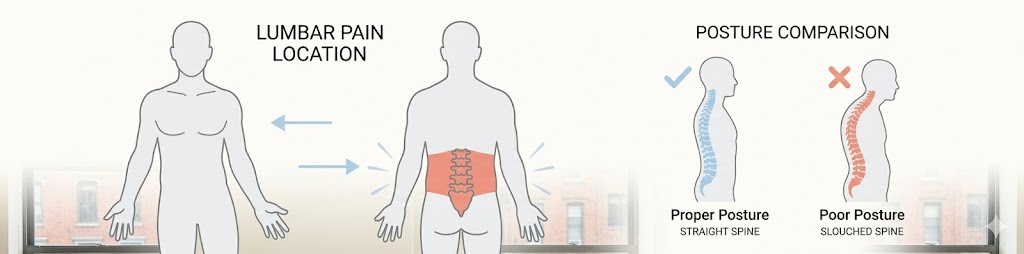
Lower back pain may develop suddenly after an injury or gradually due to wear and tear on the spine. It can be acute (short-term) or chronic (lasting more than three months), depending on the underlying cause.
What Causes Lower Back Pain?
There are many possible causes of lower back pain, including:
- Muscle or ligament strain from lifting, twisting, or sudden movement
- Herniated or bulging discs (lumbar disc herniation) pressing on nearby nerves
- Sciatica (radiating nerve pain traveling down the leg)
- Degenerative disc disease due to aging and wear
- Lumbar spinal stenosis (narrowing of the spinal canal)
- Spondylolisthesis (slippage of one vertebra over another)
- Work-related or sports-related lower back injuries
- Poor posture or prolonged sitting leading to lower back strain
In many cases, more than one factor may be contributing to your symptoms.
Common Symptoms of Lower Back Pain
Symptoms can vary depending on the cause, but often include:
- Dull, aching pain in the lower back
- Sharp or stabbing pain with movement
- Pain that radiates into the buttocks or legs (sciatica)
- Muscle tightness or spasms
- Stiffness or reduced range of motion
- Numbness, tingling, or weakness in the legs
When Should You See a Doctor for Lower Back Pain?
While some cases of lower back pain improve on their own, you should seek medical attention if you experience:
- Pain lasting longer than 1–2 weeks
- Severe or worsening pain
- Pain that radiates down the leg
- Numbness, tingling, or weakness
- Pain following an injury, fall, or car accident
- Difficulty walking, standing, or performing daily activities
Early evaluation can help prevent long-term complications and chronic pain.
Back Pain Diagnosis & Testing
To determine the cause of your lower back pain, I will begin with a detailed medical history and physical examination. This may include assessing your range of motion, strength, reflexes, and nerve function.
If necessary, diagnostic testing may be recommended, such as:
- X-rays to evaluate bone structure
- MRI or CT scans to assess discs and nerves
- EMG / nerve conduction studies to evaluate nerve function
These tests help ensure an accurate diagnosis and guide the most effective treatment plan.
Non-Surgical Treatment Options for Lower Back Pain
As a Physical Medicine and Rehabilitation specialist, my focus is on treating pain without surgery whenever possible. Treatment options may include:
- Physical therapy to improve strength, flexibility, and posture
- Targeted exercise and rehabilitation programs
- Trigger point injections for muscle-related pain
- Facet or epidural injections to reduce inflammation and nerve irritation
- Nerve blocks for persistent pain
- Medications to manage pain and inflammation
- Lifestyle and ergonomic modifications
Treatment is always tailored to your specific condition and goals.
What Can I Expect at My Visit?
During your visit, I will take the time to understand your symptoms, medical history, and any factors that may be contributing to your pain.
You will be asked about when your pain started, what makes it better or worse, and how it affects your daily activities.
A physical examination will follow, focusing on your spine, muscles, and nerves.
I may ask you to perform certain movements to better understand the source of your pain.
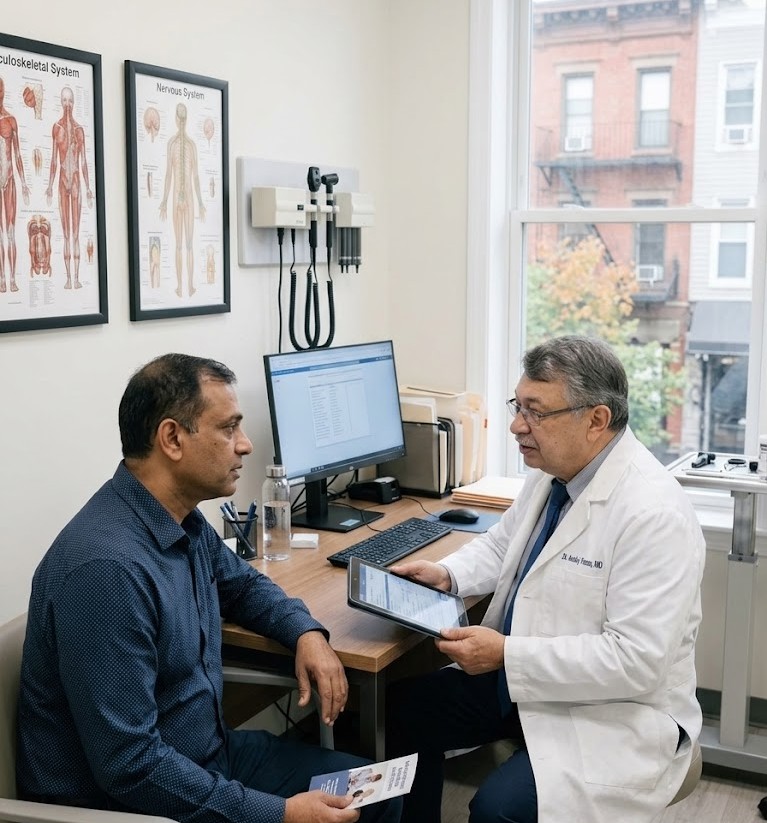
If needed, I will discuss diagnostic testing and develop a personalized treatment plan designed to relieve your pain and restore function.
Make an Appointment
If you are experiencing lower back pain, it is important not to ignore your symptoms. Early diagnosis and treatment can help prevent the condition from worsening and improve your quality of life.
Make an appointment today to begin your path toward relief and recovery, make an appointment to come in and see me. I will ensure you get the right diagnosis and the right treatment.
We see patients by appointment only. We are not a walk-in clinic, hospital or urgent care facility.
Tennis Elbow
Back Pain
Rheumatoid Arthritis
Lumbar Muscle Strain
Herniated Disc (Lumbar)
Sciatica
Degenerative Disc Disease
Spinal Stenosis (Lumbar)
Spondylolisthesis
Posture & Tech Neck
Thoracic Herniated Disc
Scoliosis & Kyphosis
Ankylosing Spondylitis
Fibromyalgia
Osteoporosis & Fractures
Radiculopathy
Peripheral Neuropathy
Carpal Tunnel Syndrome
Epidural Steroid Injections
Facet Joint Injections
PRP Therapy
Trigger Point Injections
EMG / NCV Testing
Botox Injections for Spasticity
Intrathecal Baclofen Pump Management
Post-Concussion Management
Custom Bracing (Orthotics)
Prosthetic Training & Rehab
Gait Analysis & Correction
Viscosupplementation (Gel Injections)
Percutaneous Tenotomy
Bursa Injections
Insurance We Accept
- 1199SEIU
- Aetna
- Blue Cross Blue Shield
- Cigna
- Emblem
- Fidelis
- GHI
- Health Republic
- HIP
- MagnaCare
- Medicaid
- Medicare
- No-Fault Insurance
- Oscar
- Oxford
- The Empire Plan
- UnitedHealthcare
- VNS Choice
*If you don’t see your insurance here please call (718) 942-4600